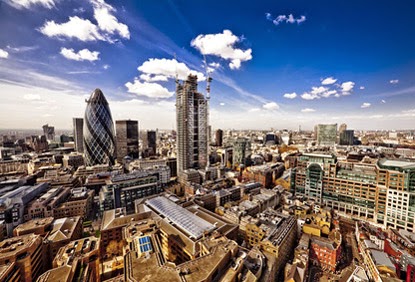
The City of London is the historical core of the English capital. It roughly matches the boundaries the Roman city of Londinium and of medieval London.
Opened in 1652, Pasqua Rosee's was the first coffee house in London. It was located on St Michael's Alley and burned down during the Great Fire of 1666.
Brought back from China by Dutch merchants, tea made its first appearance in London in September 1658, when the new beverage was advertised in a pamphlet by Thomas Garraway, a coffeehouse owner.
The Monument commemorating the Great Fire of London in 1666 is the tallest isolated stone column in the world. It rises to 62 m (202 ft) on Fish Hill, 62 m away from where the fire began, in a bakery in Pudding Lane.
St Paul's Cathedral was the tallest building (111 m/365 ft) in London from 1710 to 1962. It is the second largest church in the UK after Liverpool Cathedral. Its dome is the third largest in the world, and one of the highest. The towers of the cathedral contain the second largest ring of bells in the world. St Paul's also possesses Europe's largest crypt, where are buried, among others, Sir Chritopher Wren (the architect who rebuilt the City of London after the Great Fire), the painters Joshua Reynolds and J.MW. Turner, Lord Nelson, and the Duke of Wellington.
Founded in London in 1670, the Hudson's Bay Company is the world's oldest chartered company.
Another famous historical coffee house was Jonathan's Coffee-House, founded around 1680 by Jonathan Miles. It was frequented by politicians, writers, scientists (including Isaac Newton) and Huguenots from France. In 1698, it was used by John Castaing to post the prices of stocks and commodities - the first recorded organised trading in marketable securities in London. In the same year, other dealers expelled from the Royal Exchange for rowdiness migrated to Jonathan's. The coffee house effectively became the first London Stock Exchange and was renamed The Stock Exchange in 1773, until it was destroyed by fire in 1778.
Founded in 1694, the Bank of England was the first privately owned national bank in any country.
The Bethlehem Royal Hospital is world's oldest institution to specialise in mental illnesses. It was founded in 1247 near Bishopsgate as the Priory of St Mary Bethlehem. In 1800 the hospital moved to Lambeth in the building now housing the Imperial War Museum. It is now located in Beckenham, in South London, and works in close partnership with the King's College London Institute of Psychiatry. The word 'bedlam', meaning uproar and confusion, is derived from the hospital's original name.
The Worshipful Company of Clockmakers, one of the Livery Companies of the City of London, was formed by a Royal Charter in 1631 and remains the world's oldest horological institution. The company possesses the world's oldest collection of clocks and watches.
The world's first public street lighting with gas was installed in Pall Mall, London in 1807. In 1812, the London and Westminster Gas Light and Coke Company became the world's first gas company.
The world's oldest public zoo opened in London in 1828.
Karl Marx and Friedrich Engels's Communist Manifesto was first published (in German) in London's Liverpool Street by the German printer J.E. Burghard in 1848.
The world's first underground public lavatory opened in 1855 under the pavement next to the Bank of England.
Established in 1890, the City and South London Railway (C&SLR) was the first deep-level underground railway in the world. It was also the first major railway to use electric traction. It became the Northern Line of the London Underground.
Established in 1902, Ealing Studios in West London are the oldest continuously working film studios in the world.
At the the northern end of London Bridge, Adelaide House was the tallest office block in London at 43 m (141 ft) when it was completed in 1925. It was designed in a discreet Art Deco style with some Egyptian influences and was the first building in the City to employ the steel frame technique. It was also the first office building in the UK to have electric and telephone connections on every floor as well as a central ventilation system.
The Museum of London, which retraces the history of London from Prehistoric times to the present day, is the largest urban history museum in the world.
The Shard, a 72-storey skyscraper near London Bridge, is the tallest building in the European Union, standing at a height of 309.6 metres (1,016 ft). It was inaugurated on 5 July 2012, three weeks before the London Olympics.
In 2012 London became the first city to host the modern Olympic Games three times, having previously done so in 1908 and in 1948.
The ArcelorMittal Orbit, a 115-metre-high (377 ft) sculpture and observation tower in the Olympic Park in Stratford, East London, is Britain's largest piece of public art. It is intended to be a permanent lasting legacy of London's hosting of the 2012 Summer Olympics.
London used to be the largest and most influential city in the world. With a population of 12 million, it is still the world's largest financial centre and Europe's largest city.
London Heathrow Airport is the world's busiest airports by international passenger traffic, and the third for total traffic.
In 2007, Inner London - West had a GDP per capita at PPP of (US$ 152,116) - the highest of any city on Earth. In 2010, Eurostat calculated that Inner London's GDP per capita stood at 328% of the EU27 average.
Opened in 1652, Pasqua Rosee's was the first coffee house in London. It was located on St Michael's Alley and burned down during the Great Fire of 1666.
Brought back from China by Dutch merchants, tea made its first appearance in London in September 1658, when the new beverage was advertised in a pamphlet by Thomas Garraway, a coffeehouse owner.
The Monument commemorating the Great Fire of London in 1666 is the tallest isolated stone column in the world. It rises to 62 m (202 ft) on Fish Hill, 62 m away from where the fire began, in a bakery in Pudding Lane.
St Paul's Cathedral was the tallest building (111 m/365 ft) in London from 1710 to 1962. It is the second largest church in the UK after Liverpool Cathedral. Its dome is the third largest in the world, and one of the highest. The towers of the cathedral contain the second largest ring of bells in the world. St Paul's also possesses Europe's largest crypt, where are buried, among others, Sir Chritopher Wren (the architect who rebuilt the City of London after the Great Fire), the painters Joshua Reynolds and J.MW. Turner, Lord Nelson, and the Duke of Wellington.
Founded in London in 1670, the Hudson's Bay Company is the world's oldest chartered company.
Another famous historical coffee house was Jonathan's Coffee-House, founded around 1680 by Jonathan Miles. It was frequented by politicians, writers, scientists (including Isaac Newton) and Huguenots from France. In 1698, it was used by John Castaing to post the prices of stocks and commodities - the first recorded organised trading in marketable securities in London. In the same year, other dealers expelled from the Royal Exchange for rowdiness migrated to Jonathan's. The coffee house effectively became the first London Stock Exchange and was renamed The Stock Exchange in 1773, until it was destroyed by fire in 1778.
Founded in 1694, the Bank of England was the first privately owned national bank in any country.
The Bethlehem Royal Hospital is world's oldest institution to specialise in mental illnesses. It was founded in 1247 near Bishopsgate as the Priory of St Mary Bethlehem. In 1800 the hospital moved to Lambeth in the building now housing the Imperial War Museum. It is now located in Beckenham, in South London, and works in close partnership with the King's College London Institute of Psychiatry. The word 'bedlam', meaning uproar and confusion, is derived from the hospital's original name.
The Worshipful Company of Clockmakers, one of the Livery Companies of the City of London, was formed by a Royal Charter in 1631 and remains the world's oldest horological institution. The company possesses the world's oldest collection of clocks and watches.
The world's first public street lighting with gas was installed in Pall Mall, London in 1807. In 1812, the London and Westminster Gas Light and Coke Company became the world's first gas company.
The world's oldest public zoo opened in London in 1828.
Karl Marx and Friedrich Engels's Communist Manifesto was first published (in German) in London's Liverpool Street by the German printer J.E. Burghard in 1848.
The world's first underground public lavatory opened in 1855 under the pavement next to the Bank of England.
Established in 1890, the City and South London Railway (C&SLR) was the first deep-level underground railway in the world. It was also the first major railway to use electric traction. It became the Northern Line of the London Underground.
Established in 1902, Ealing Studios in West London are the oldest continuously working film studios in the world.
At the the northern end of London Bridge, Adelaide House was the tallest office block in London at 43 m (141 ft) when it was completed in 1925. It was designed in a discreet Art Deco style with some Egyptian influences and was the first building in the City to employ the steel frame technique. It was also the first office building in the UK to have electric and telephone connections on every floor as well as a central ventilation system.
The Museum of London, which retraces the history of London from Prehistoric times to the present day, is the largest urban history museum in the world.
The Shard, a 72-storey skyscraper near London Bridge, is the tallest building in the European Union, standing at a height of 309.6 metres (1,016 ft). It was inaugurated on 5 July 2012, three weeks before the London Olympics.
In 2012 London became the first city to host the modern Olympic Games three times, having previously done so in 1908 and in 1948.
The ArcelorMittal Orbit, a 115-metre-high (377 ft) sculpture and observation tower in the Olympic Park in Stratford, East London, is Britain's largest piece of public art. It is intended to be a permanent lasting legacy of London's hosting of the 2012 Summer Olympics.
London used to be the largest and most influential city in the world. With a population of 12 million, it is still the world's largest financial centre and Europe's largest city.
London Heathrow Airport is the world's busiest airports by international passenger traffic, and the third for total traffic.
In 2007, Inner London - West had a GDP per capita at PPP of (US$ 152,116) - the highest of any city on Earth. In 2010, Eurostat calculated that Inner London's GDP per capita stood at 328% of the EU27 average.
source-http://www.eupedia.com/

